

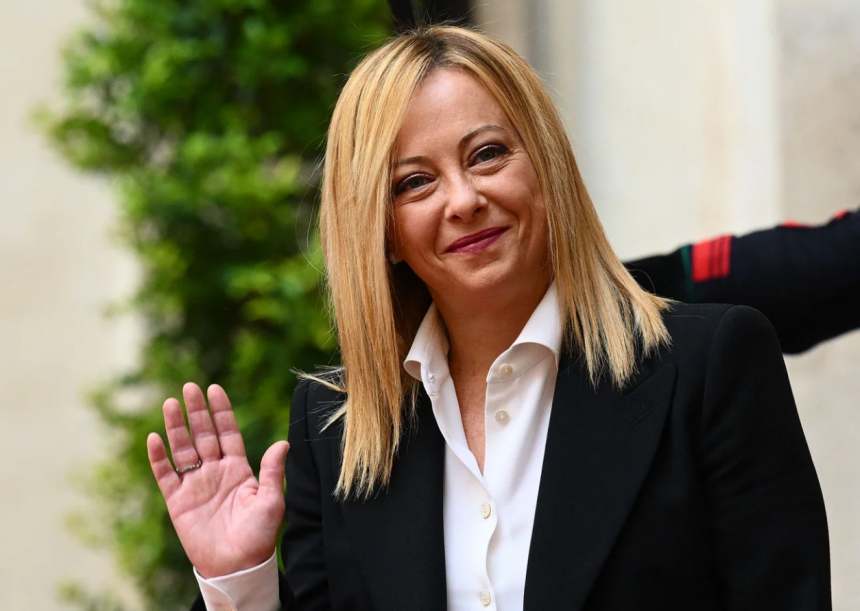
Giorgia Meloni has become one of the most influential and widely discussed political figures in modern Italy. As leader of the political party Fratelli d’Italia and Prime Minister of Italy, Meloni represents a significant transformation within the Italian political landscape. Her rise reflects broader changes taking place across Europe, where debates surrounding national identity, economic uncertainty, migration, sovereignty, and political representation have increasingly shaped public discourse.
Born in Rome in 1977, Giorgia Meloni entered political activism at a young age. Her early political engagement developed during a period of intense transition in Italian politics following the collapse of traditional party structures in the 1990s. She became involved in youth political organizations and gradually built a reputation for discipline, strong communication skills, and organizational commitment.
Unlike some political figures who emerge suddenly through media popularity, Meloni’s rise was gradual and deeply rooted in party structures and long-term political work. Over the years, she occupied multiple institutional roles, including serving as Minister for Youth in a center-right government. These experiences contributed to her image as a politician with both ideological conviction and practical governmental experience.
One of the defining aspects of Meloni’s political identity is her emphasis on national sovereignty and cultural identity. Her speeches frequently focus on themes such as family, tradition, national unity, and the role of the state in protecting social cohesion. Supporters view this approach as a defense of cultural continuity and democratic self-determination, while critics sometimes interpret it as excessively nationalist or conservative.
Meloni’s communication style has played a major role in her political success. She often combines direct language with emotionally resonant messaging, allowing her to connect strongly with voters frustrated by traditional political elites. Her public appearances tend to emphasize clarity and conviction rather than technocratic complexity, which has increased her appeal among a broad segment of the electorate.
The growth of Fratelli d’Italia under her leadership marked one of the most important political developments in Italy during the last decade. Initially considered a relatively small political force, the party expanded significantly by presenting itself as an alternative to both establishment politics and unstable coalition dynamics that had characterized much of recent Italian governance.
Economic policy has been another central component of Meloni’s political agenda. While maintaining conservative positions on several social and cultural issues, her government has also focused on themes such as support for domestic businesses, labor stability, energy security, and economic resilience. Italy’s economic challenges — including public debt, inflation concerns, youth unemployment, and regional inequality — have remained important tests for her administration.
Migration policy has become one of the most internationally visible aspects of Meloni’s leadership. Italy’s geographic position in the Mediterranean has made migration a major political issue for decades. Meloni has advocated stricter border controls and stronger regulation of migration flows, arguing that national governments must maintain control over immigration systems. These policies have generated both domestic support and international debate.
At the European level, Meloni’s leadership has attracted particular attention because it reflects the growing influence of conservative and nationalist movements across the continent. However, despite earlier skepticism from some international observers, her government has generally pursued pragmatic relations with European institutions and international allies. This balance between ideological identity and institutional pragmatism has become one of the most closely observed aspects of her leadership.
Another important element of Meloni’s public image is her position as one of the few female leaders within European conservative politics. Her political career has often been discussed not only in terms of ideology but also in relation to gender representation and leadership dynamics. She frequently presents herself as someone who achieved political success through persistence, discipline, and long-term commitment rather than political privilege.
Critics of Meloni often raise concerns regarding political polarization, civil rights questions, and the broader direction of nationalist politics in Europe. Supporters, on the other hand, argue that she represents democratic responsiveness to voter dissatisfaction with globalization, bureaucratic institutions, and economic insecurity.
Her government operates within a highly complex political environment. Italy has historically experienced frequent government changes, coalition tensions, and economic pressures. Managing political stability while maintaining ideological coherence remains one of the major challenges facing any Italian administration.
Meloni’s rise also reflects transformations in modern political communication. Like many contemporary leaders, she has effectively used digital media, televised debates, and direct messaging strategies to build strong voter engagement. Her ability to shape political narratives outside traditional media structures contributed significantly to her national prominence.
Internationally, Giorgia Meloni is now viewed as one of Europe’s most important conservative leaders. Her positions on European integration, energy policy, defense cooperation, and migration continue to influence broader continental discussions about the future direction of the European Union.
Whether admired as a determined reformer or criticized as a polarizing conservative figure, Meloni has undeniably reshaped Italian political debate. Her leadership reflects ongoing tensions between globalization and national identity, institutional governance and populist sentiment, economic pragmatism and ideological conviction.
As Italy continues navigating economic, geopolitical, and social challenges, Giorgia Meloni’s political role remains central to understanding both contemporary Italian politics and wider European political trends.