

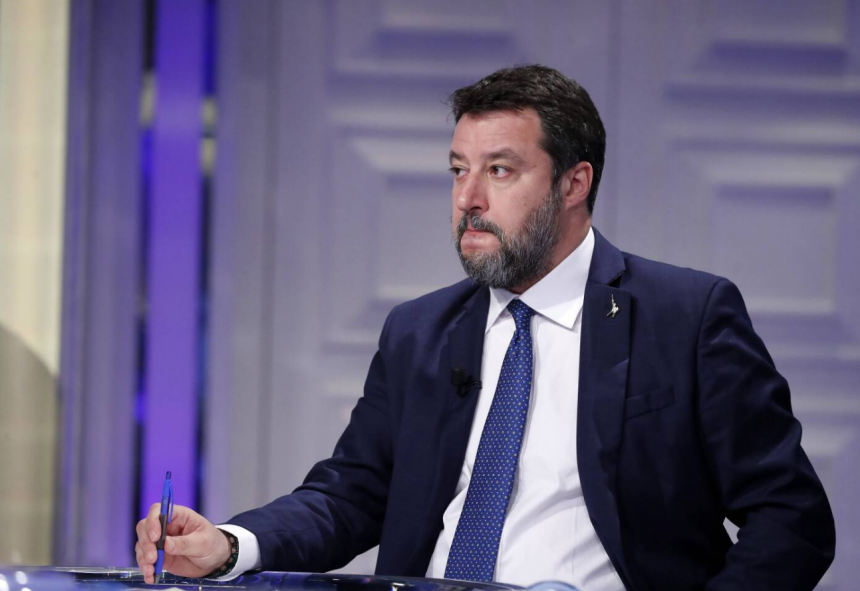
Matteo Salvini is one of the most recognizable and debated political figures in Italy’s contemporary political landscape. As leader of the Lega party and former Minister of the Interior, Salvini became known for his direct communication style, strong positions on migration and security, and ability to connect with voters through highly visible media presence. Over the years, he transformed both his party and his own political image, becoming a central figure in discussions about populism, sovereignty, and political change in Europe.
Born in Milan in 1973, Salvini entered politics relatively early and became active within regional political movements linked to northern Italy. The Lega originally emerged as a party focused heavily on regional autonomy and economic concerns in the north of the country. Under Salvini’s leadership, however, the movement gradually evolved into a broader national political force with a stronger emphasis on identity, border control, and national sovereignty.
One of Salvini’s most distinctive characteristics is his communication strategy. Unlike traditional politicians who rely heavily on formal institutional language, Salvini frequently uses simple, direct, and emotionally charged messaging. Social media became an especially important tool in his political rise, allowing him to communicate directly with supporters without relying entirely on traditional media channels.
This style helped him build a strong public image among voters who felt disconnected from conventional political elites. Supporters often describe Salvini as approachable, authentic, and willing to speak openly about issues that many citizens consider important but insufficiently addressed by mainstream politics.
Migration policy became the issue most closely associated with Salvini’s political identity. During his tenure as Minister of the Interior, he promoted stricter immigration controls, stronger border enforcement, and more restrictive policies toward migrant arrivals across the Mediterranean. These positions generated extensive public debate both within Italy and internationally.
Supporters argued that Salvini’s policies reflected legitimate concerns about national security, border management, and social stability. Critics accused him of using divisive rhetoric and contributing to polarization surrounding migration and multiculturalism. Regardless of perspective, migration became one of the defining themes of his political career.
Security and law enforcement also occupied central positions in Salvini’s political messaging. He frequently emphasized themes such as public order, crime prevention, and institutional authority. This approach resonated with segments of the electorate seeking stronger state responses to social instability and economic uncertainty.
Economically, Salvini often combined nationalist themes with criticism of excessive bureaucracy and European institutional constraints. He advocated greater flexibility for national economic policy and repeatedly emphasized the importance of protecting Italian businesses, workers, and industries. His rhetoric frequently framed economic debates around sovereignty and national decision-making.
At the European level, Salvini became associated with broader populist and nationalist movements that gained influence across multiple countries during the last decade. His alliances and political relationships with other European conservative and nationalist leaders attracted international attention and positioned him as a major participant in continental debates about migration, integration, and sovereignty.
Despite his strong ideological image, Salvini’s political career has also involved pragmatic coalition-building. Italian politics often requires complex alliances between parties with different priorities and identities. Salvini participated in governments with both anti-establishment and center-right coalitions, reflecting the fluid and strategic nature of Italian parliamentary politics.
His critics frequently point to the confrontational aspects of his political style. They argue that emotionally charged rhetoric can intensify social division and oversimplify complex policy issues. Others question whether highly personalized political communication weakens institutional trust and long-term governance stability.
Supporters, however, view Salvini as a politician who understands ordinary citizens and is willing to challenge established political norms. For many voters, his popularity reflects dissatisfaction with technocratic politics, economic insecurity, and perceptions of institutional distance from everyday concerns.
Another important dimension of Salvini’s political identity is media visibility. He maintains an unusually active presence across digital platforms, television appearances, and public events. This constant visibility allows him to shape public conversations rapidly and maintain strong political relevance even during periods of electoral difficulty.
At times, Salvini’s career has also been marked by political setbacks and fluctuations in public support. Italian politics is highly dynamic, and public opinion can shift quickly due to economic conditions, coalition tensions, or changing national priorities. Nevertheless, Salvini has consistently remained a central figure within Italian political life.
His leadership of the Lega transformed the party from a primarily regional force into one capable of influencing national government and broader European political discussions. This transformation remains one of the most significant organizational shifts in recent Italian politics.
Salvini’s political influence reflects broader international trends involving populism, skepticism toward globalization, debates over migration, and demands for stronger national control over policy decisions. Similar dynamics have appeared across many democratic societies, making his career relevant beyond Italy alone.
Whether viewed as a defender of sovereignty and security or as a divisive populist figure, Matteo Salvini has undeniably shaped the direction of modern Italian political discourse. His communication style, policy priorities, and political strategies continue to influence debates about identity, governance, and democracy in Italy and across Europe.