


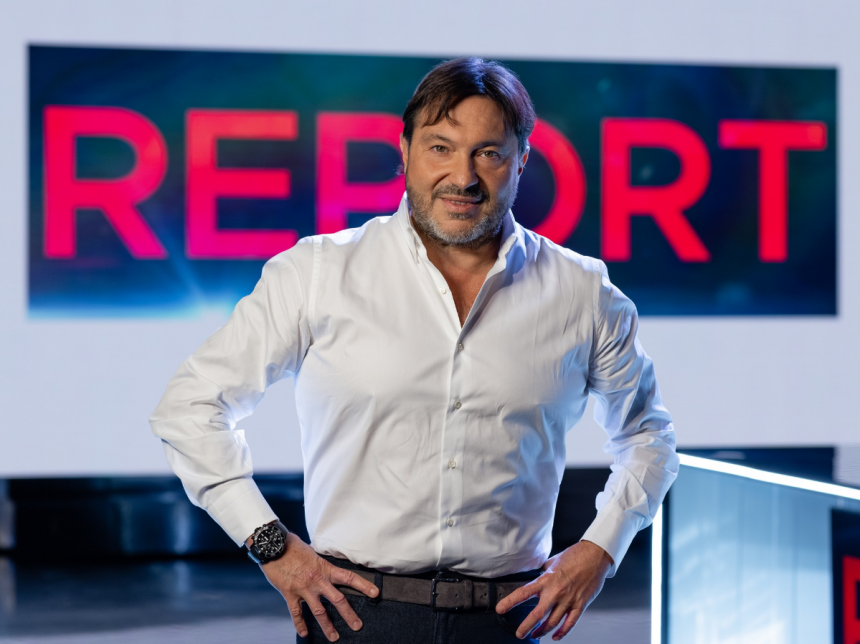
Sigfrido Ranucci is widely recognized as one of the most important figures in contemporary Italian investigative journalism. Known primarily for his work with the television program “Report” on Rai 3, Ranucci built a reputation for detailed investigations, long-form reporting, and a journalistic approach centered on public accountability and institutional transparency. In an era characterized by rapid news cycles and digital media fragmentation, his work represents a form of journalism focused on depth, documentation, and investigative persistence.
Born in Rome in 1961, Ranucci developed his professional career within Italian public broadcasting. Over time, he became associated with investigative reporting projects that examined political institutions, economic systems, environmental issues, organized crime, healthcare controversies, and questions involving public administration.
One of the defining characteristics of Ranucci’s work is methodological rigor. His investigations often involve extensive research, interviews, document analysis, and long preparation periods before publication. This approach distinguishes investigative journalism from more immediate forms of daily news reporting and reflects a tradition of journalism aimed at uncovering hidden structures, conflicts of interest, or institutional failures.
The television program “Report,” with which Ranucci became strongly associated, occupies a unique position within Italian media. The program is known for combining investigative reporting with accessible storytelling, allowing complex subjects to reach broad audiences. Topics covered by the program have included environmental risks, corruption allegations, financial systems, pharmaceutical issues, infrastructure projects, and international affairs.
Under Ranucci’s leadership, “Report” continued the editorial direction established by earlier investigative journalists while adapting to new media realities and political contexts. The program maintained a reputation for pursuing sensitive or controversial subjects that often generate significant public discussion.
Supporters of Ranucci’s work describe him as a journalist committed to transparency, accountability, and democratic oversight. They argue that investigative journalism plays an essential role in democratic societies by examining powerful institutions and bringing complex issues into public debate.
Critics, however, sometimes accuse investigative programs of presenting issues through overly critical or selective perspectives. Like many investigative journalists, Ranucci operates within a media environment where questions about objectivity, editorial framing, and political interpretation are frequently debated.
Despite these discussions, his influence within Italian journalism remains substantial. Investigative reports associated with “Report” have often generated parliamentary debate, legal responses, media controversy, and broader national attention. This demonstrates the continuing impact that television journalism can maintain even in an increasingly digital media landscape.
Another important aspect of Ranucci’s work is the balance between journalism and public education. Investigative reporting frequently involves translating technical or highly specialized information into narratives understandable for general audiences. Whether discussing financial structures, environmental contamination, healthcare systems, or international political relations, Ranucci’s programs often aim to make complicated subjects accessible without completely simplifying them.
His professional reputation is also connected to the broader tradition of public service journalism in Europe. Public broadcasters such as Rai historically played major roles in shaping national information systems and political culture. Investigative journalism within these institutions carries particular visibility because it operates within highly influential national media frameworks.
At the same time, working within public broadcasting environments can involve political pressure, institutional scrutiny, and debates over editorial independence. Investigative journalists frequently encounter criticism from political actors, corporations, or institutions affected by published investigations. Ranucci’s career has repeatedly demonstrated the tensions that can emerge between journalism and centers of political or economic power.
Technological transformation has also affected investigative journalism significantly during Ranucci’s career. The rise of social media, online news distribution, and fragmented attention spans created new challenges for long-form reporting. Nevertheless, programs like “Report” continue attracting audiences interested in in-depth analysis rather than exclusively short-form or rapid-content media.
One reason Ranucci remains influential is his consistency in emphasizing documentation and evidence-based reporting. In contemporary media environments often shaped by opinion-driven commentary and rapid reactions, investigative journalism maintains a distinct role focused on verification, research, and detailed reconstruction of events or systems.
His public image is generally associated more with professional credibility than celebrity culture. Unlike media personalities who rely heavily on personal branding, Ranucci’s reputation is closely tied to the investigative work itself and the institutional identity of the program he represents.
The subjects addressed in his investigations frequently intersect with broader social concerns in Italy, including corruption, environmental sustainability, healthcare management, economic inequality, and institutional transparency. As a result, his journalism often becomes part of larger democratic discussions about accountability and public trust.
Investigative journalism also carries legal and ethical complexity. Journalists working in this field must navigate questions involving privacy, evidence standards, defamation law, source protection, and editorial responsibility. Ranucci’s long career reflects the demanding balance between public interest reporting and institutional or legal constraints.
Whether praised as an essential watchdog journalist or criticized by those who disagree with particular investigations, Sigfrido Ranucci remains one of the defining figures of Italian investigative media. His work illustrates the continuing importance of long-form journalism in democratic societies facing increasingly complex political and economic realities.
As media systems continue evolving, figures like Ranucci demonstrate that investigative journalism still occupies a vital place within public life — not only as a source of information, but also as a mechanism for scrutiny, transparency, and democratic debate.